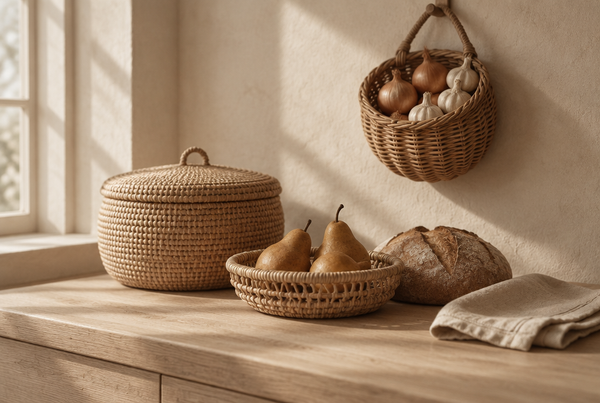
How to Care for Jute, Seagrass and Rattan
Share
Natural fibre is forgiving, but it is not synthetic, and the habits that keep a polypropylene rug looking new will slowly wreck a jute one. Almost all of it comes down to two rules: keep it dry, and be gentle.
The short version
- Vacuum with the beater bar off. Suction only.
- Blot spills straight down. Never rub.
- Keep natural fibre out of bathrooms and anywhere that stays damp.
- Rotate rugs twice a year so sun fading stays even.
- Some shedding in the first few weeks is normal and stops.
The everyday routine
Three habits cover almost everything.
- Vacuum weekly on suction only. A rotating brush bar pulls at the weave, lifts loose fibre and creates fuzz that never goes back. Use the hard floor setting or a hose attachment.
- Shake out what you can. Baskets, runners and small mats do better with a shake over a bin than with a vacuum.
- Move things occasionally. A basket that never moves leaves a clean patch under it. Shifting things a few inches now and then keeps the tone even.
Spills and marks
Speed matters far more than product. Blot with a dry cloth pressed straight down, lifting the liquid out rather than pushing it in. Rubbing drives the spill into the fibre and can leave a permanent ring where the weave has been disturbed.
If a mark remains, use a barely damp cloth with a drop of mild soap, work from the outside of the mark inwards, then dry the area quickly with a fan or an open window. The goal is to get the fibre dry within an hour or two.
Never soak itNo steam cleaners, no shampooers, no machine washing, and never leave a natural fibre item to soak. Wet jute stiffens as it dries, and the weave can pucker in a way that does not come back.
Shedding: what is normal
New jute sheds. Short fibres left over from spinning and weaving work their way out over the first few weeks of use, and a chunky boucle weave sheds more than a flat tight one. Vacuum on suction only and it tails off and stops.
What is not normal is shedding that continues for months, or long strands pulling loose rather than short fluff. That usually means a brush bar is catching the weave, so check your vacuum setting first.
Damp, mould and where not to use natural fibre
Jute and seagrass absorb moisture from the air and hold it. In a room that stays humid, that shows up first as a musty smell and later as mould spotting on the underside.
Avoid bathrooms, laundry rooms, unheated conservatories and directly over floor vents. In an entryway that gets wet boots, put a washable mat in the wet zone and start the natural fibre a step further in.
If something does get damp, get air moving around it immediately, including underneath. Standing a basket on its side or lifting a rug corner over a chair does more than any amount of blotting.
Sunlight
Undyed natural fibre lightens in direct sun. It happens slowly and evenly and most people like the result, but only if the whole piece gets the same exposure. Rotate rugs 180 degrees twice a year and move baskets that sit in a sun patch, and the tone stays consistent.
Rattan and bamboo specifics
Rattan and bamboo are more rigid, so the risks are different. Dust with a dry brush, getting into the gaps where the weave crosses, and wipe with a barely damp cloth only when needed. Keep them away from radiators and direct heat, which dries the fibre out and makes it brittle and prone to splitting.
If a rattan piece starts to feel dry, a very light wipe with a damp cloth once a season is usually enough to keep it supple.
Natural fibre is not meant to stay new. The tone softens, the weave settles, and after a year it looks like it has always been in the room. Care is about avoiding damage, not preventing age.
Common questions
How do you clean a jute rug?
Vacuum regularly with the beater bar switched off, using suction only. Blot spills immediately with a dry cloth pressed straight down rather than rubbed. For a stubborn mark, use a barely damp cloth with a little mild soap and dry the area quickly. Never soak, steam clean or machine wash jute.
Why is my new jute rug shedding?
Short fibres left over from spinning and weaving work their way out over the first few weeks of use. This is normal and it stops. Vacuum on suction only, because a rotating brush bar pulls at the weave and keeps creating new loose fibre.
Can natural fibre baskets get wet?
Occasional light dampness is survivable if the item dries quickly, but natural fibre should never be soaked or left damp. Jute and seagrass hold moisture, which leads to a musty smell and eventually mould. Keep them out of bathrooms and any room that stays humid.
How do I get rid of a musty smell in a woven basket?
Move it somewhere dry and airy with good circulation around all sides, including underneath, and leave it for a few days. Sunlight helps, though it will lighten the fibre. If the smell persists after the basket is fully dry, mould has usually taken hold in the weave and the piece is best replaced.
Do I need a rug pad under a jute rug?
Yes, it is worth it. A pad stops the rug creeping, protects the floor beneath from the coarse backing, adds cushion underfoot, and allows a little air to move under the rug, which helps it stay dry.
Built to be lived withJute, seagrass, water hyacinth and cotton rope, chosen for how they wear over years rather than how they look on day one.